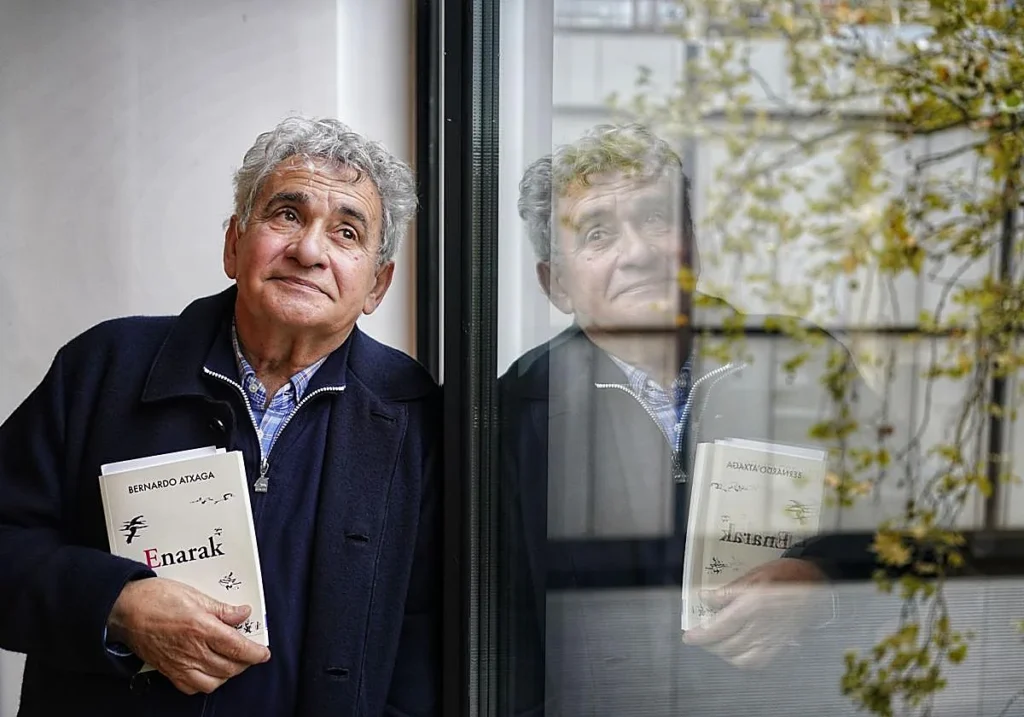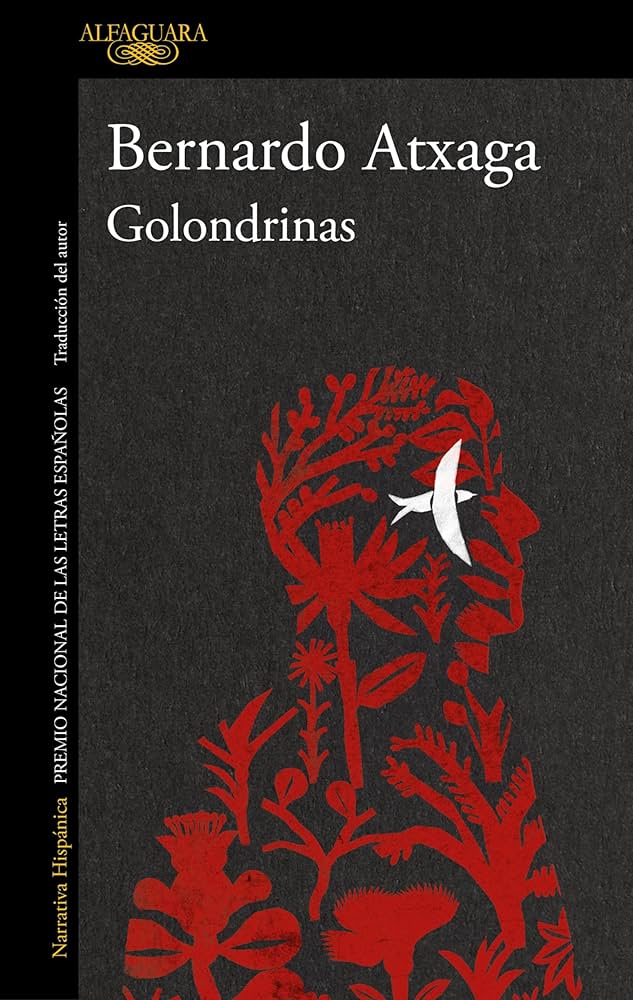

"Atxaga employs a wide variety of literary devices in the service of this fable, which is as original and inventive as it is strange and surprising—and even somewhat whimsical and playful. [...] These traits suggest an avant-garde inclination on Atxaga’s part, not uncommon in his writing, into which he pours an extra dose of innovation; but it seems to me that this is not the primary driving force. Rather, I believe, it stems from something simpler: a playful spirit, a desacralizing disposition on the part of the writer that leads him to fill the fable with playfulness and humor." Santos Sanz Villanueva, El Español
"But, once again with Atxaga, what makes this reading such a delight are the innovations, the inside jokes, and the unique language he creates—which, in this case, is the anti-angelic" Juan Marqués, El Mundo
"'Enarak' combines suspense, humor, and layers of emotional depth. Atxaga offers a brisk pace and a humanist perspective. The publisher assures that the reader will enjoy the novel "pleasurably." Maite Redondo (Deia, October 2025)
“A narrative steeped in poetry, in which he has brilliantly combined reality and fiction.”
Jury of the Premio Nacional de las Letras Españolas
“He recreates a new and fresh world with an originality seldom seen in contemporary Spanish literature.”
The New York Times
“Poet, essayist, and storyteller, Atxaga […] feeds on reality and on his own biography, yet one could say he writes with a magic wand. […] He does not deny the everyday; he affirms it.”
J. A. Masoliver Ródenas, La Vanguardia
“One of the most brilliant writers […].”
Francisco Millet Alcoba, La Opinión de Málaga
“To say Bernardo Atxaga is to utter weighty words.”
Susana Marqués, Onda Cero
“Atxaga trained us in the art of understanding birds. And, above all, of understanding life and some of its deadly sins—from the other side.”
J. Ernesto Ayala-Dip, Babelia
“A novelist who speaks as if he still kept in his mind and eyes the wonder of a child.”
Juan Cruz, El Periódico
“Atxaga once again draws us into a universe where reality blends with fiction.”
Más de uno (Onda Cero)
In 1992, in the cemetery of Arroa Goia, around thirty people gather around the grave in which stone lifter and boxer José Manuel Ibar Azpiazu (Urtain) is to be buried, his life having ended in suicide, perhaps because he could no longer bear the weight of a public “mask” that ultimately devoured the man beneath it. His tragic end brings to the surface an episode from the past—the brutal death of an ox near a nearby mill—which binds several characters together and leaves a wound that is difficult to heal.
In 2017, in that same place, a heterogeneous crowd attends the burial of Guillermo, known as the Tyrolean, the man who hated Urtain, an excessive figure tied to the night and the margins. The mystery surrounding the true cause of his death reveals a degraded social environment. The mill, which had belonged to him in his final years, seems to guard its own secrets: once again, the past bursts into the present. Twenty-five years later, in 2042, a circle of people stands in Arroa Goia around the grave of Pedro, the artist who loved Urtain and rescued the mill from squalor.
Uzariel, an immaterial being who sees and hears everything, a military angel who, together with his companions, possesses a special language and an irreverent sense of humor, narrates this story structured in three temporal planes—a masterful tale about friendship, sex, and the silences that stretch across decades and shape the lives of its protagonists.