“The most innovative and exciting thing that European literature has to offer today. Reading it is a pleasure.” –Publishing News
“Its enormous variety and unique blend of genre possibilities set it apart from almost everything else in narrative. Its pages recreate a fresh, new world with an originality rarely seen in contemporary Spanish literature.” –The New York Times
“You have to be a truly great writer to dare to do so much and produce such a fine work.” –José María Pozuelo Yvancos, ABCD de las Artes y las Letras
“The characters are truly fascinating. Through them unfolds a series of funny, exciting, and always memorable episodes that reinforce the novel’s fable-like quality.” –J.A. Masoliver Ródenas, La Vanguardia
“A colourful tale of decay in the Belgian Congo… As irresistible as García Márquez, as forceful as Vargas Llosa.” – The Guardian
Atxaga has been compared to Conrad, but the writer’s captivating literary anthropologies don’t seek to edify or shed light on the human condition. [...] Atxaga possesses an uncanny gift for details bordering on the forensic, and he breathes life into this bevy of invariably perfectly pitched characters—from Captain Biran’s cowardly orderly Donatien to the mysterious Club Royal bartender Livo, who finally decides to take matters into his own hands when Van Thiegel perpetuates one final, inexcusable outrage. Nearly impossible to put down, Atxaga’s thrilling colonial masterpiece pulses with a kind of elemental power, like the Congo River itself. – Publishers Weekly
We fall in love with the Basque author’s language, which smells of freshly baked bread, and in which one can hear the whistling wind that always precedes the rain, and the gentle crackling of the fire around which words flow like memories, unveiling a story, or creating the warp in which the plot and melancholy unfold. This is the sound of Bernardo Atxaga, writer of Basque etchings about the ravages of violence, the humanity of rebels, the invisible realities that converge in the complicity of the real. [...] It has been a pleasure to read him. Bernardo Atxaga has crafted his literary worlds in two voices, with two equidistant languages, different in their roots as spirits of identities, between which his writing is the bridge of conversation, with the purpose of making literature a mental space, a tree, a house, a home where everyone can find shelter, and to which one returns to recount the journey. – Guillermo Busutil, La Opinión (Málaga)
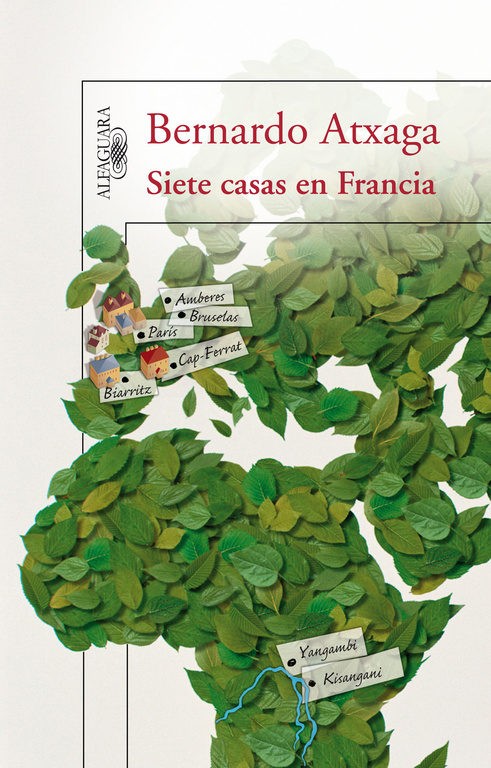
Seven houses in France describes in detail, with humour and a bit of satire, the profile of a group of peculiar characters that move between the ridicule, the intrigue, the uneasiness and the absurd, emphasizing their condition of victims of human impulses and defects. It is a novel that avoids being a dark chronicle or a vehement social denounce; it seeks, through humour and adventure, a metaphor that speaks of the sinister side of our world.
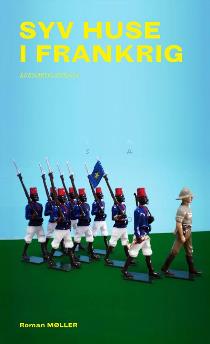
In the heart of the Congolese jungle rises the military station of Yangambi where a detachment of the Force Publique, the military wing in Africa of king Leopold II of Belgium, vegetates. The deafening cries of the chimpanzees and mandrills accompany the daily huge harvesting of rubber. Amusement options are few. Fear of an attack from the native rebels, from a cheetah, a lion or a black mamba, make hunting parties scarce. Letters from relatives, local newspapers and shooting competitions provide entertainment during daylight. Alcohol and playing cards at the Club Royal do it at night, as it does visiting the nearest brothels. But all this does not shun the atmosphere of apathy and melancholy that prevails among the members of the camp. Most of them spend the long days lost in dreaming… dreams of returning home to Belgium.
Captain Lalande Biran, poet and amateur painter, demands a virgin every week, has eyes d´or et d´azur and loses his wedding ring every other day, while he impatiently waits for the moment that his illicit enrichment by trafficking with mahogany and ivory will allow him to buy the seventh house he promised to his wife and pack his suitcases back. Lieutenant Van Thiegel, a lady-killer ex legionary that collects women and letters from his mother, dreams of opening a modern bar in Antwerp and of seducing Biran’s wife, of which he keeps a photograph in bathing suit that he stole from her husband. Official Chrysostome, the most prodigious shooter that ever stepped in Congo and who carries over his naked breast a blue ribbon and a gold chain, awakens the others curiosity because of his taciturn character and, specially, because of his nil interest in women. Servant Donatien and chief of waiters Livo, hide dark intentions behind their solicitous and obliging attitude, in waiting for the right moment to revert the situation
The news that the very same Leopold II, escorted by the duke Armand de Saint Foix (a close friend of Lalande Biran) will visit Yangambi to make a tribute to the Virgin in the near small island of Samanga, takes the station out of its lethargy. However, euphoria is brief, since in a short time arrives a letter informing that the procession will be finally only formed by a bishop and a reporter equipped with a Kodak camera to immortalise the moment.
Ambushes from rebels, servants distrust, black mambas venom and wild beasts may not be the main threats for the Belgian occupancy forces. Envy, ambition, jealousy, hate and other human feebleness moving among them can easily make blood run.