“Her work, with its fragile, painful beauty, resembles, in some ways, that of Patrick Modiano.” —Le Figaro Littéraire
“She delves deep, observing how anonymous individuals are caught up and transformed by major political events.” —Les Inrockuptibles
“Enriching her memoirs with historical research, Rosetta Loy shows how long it took her compatriots to understand what was happening around them.” —L’Express
"Rereading Loy's work, one gets the impression that the crux of our recent history is concentrated in a handful of years, destined to weigh heavily on the life of this wretched country for decades to come." —Il Manisfesto
«Rosetta Loy, the writer of memory» —Corriere della Sera
«It stings to say it, but a black edge marks our innocent days, without memory and without history»
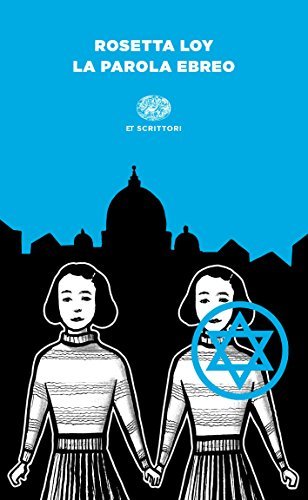
It was 1938 when Mussolini launched the anti-Semitic campaign, the first phase of a tragedy that would affect millions of people. Rosetta Loy’s The Word «Jew» takes us back to the climate of the years in which her Catholic family and a certain Italian bourgeoisie, though not openly aligned with Fascism, accepted the racial laws without realizing the tragedy that was unfolding.
The beautiful Roman house, the mountain holidays, the sweet memories of an innocent childhood are juxtaposed with other, more disturbing memories that gradually emerge in the faces and figures of people suddenly made «other» by decree and therefore persecuted.
Loy rediscovers the mysterious and ambiguous signs of that daily life lived sheltered from history and delves into the details of events, recounting, with the help of letters, declarations, and speeches, the crucial moments of a period in which no one—least of all Vatican diplomacy, especially in the person of Pius XII—was capable of opposing the Nazi madness.
Rosetta Loy thus traces the contours of that «grey area» where individual and collective memory ominously overlap, uncovering the crux of an historical and moral dilemma of undiminished relevance.