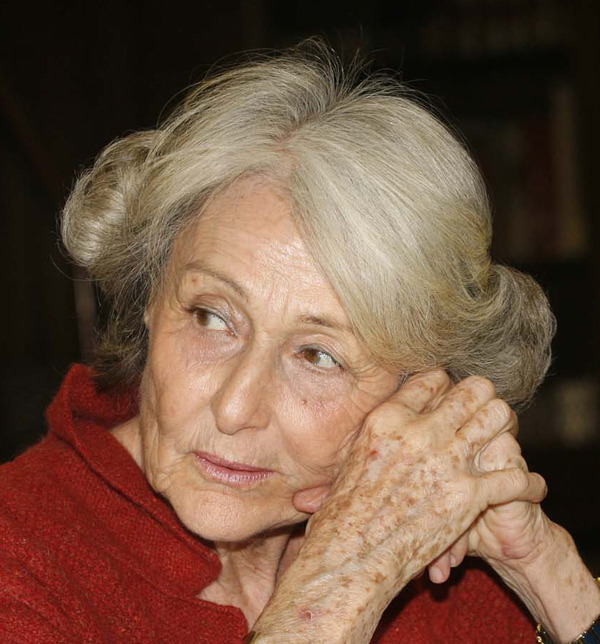
Rosetta Loy was born in Rome in 1931, the youngest of four children in a well-off Catholic family. Her father was from Piedmont, and her deep connection to his native Monferrato would later shape much of her fiction. After her debut with La bicicletta (1974, Viareggio Opera Prima Prize), she established herself as one of Italy’s most refined and widely read novelists.
Her writing, elegant and introspective, intertwines family stories, historical memory, and moral awareness. Loy’s fiction often explores the intersection between private lives and the great fractures of the twentieth century — Fascism, the war, and the legacy of silence that followed.
Among her most celebrated works are Le strade di polvere (Einaudi, 1987), Cioccolata da Hanselmann (Rizzoli, 1995) and La parola ebreo (Einaudi, 1997), translated in several languages and awarded Italy’s major literary prizes, including the Viareggio, Campiello, Rapallo-Carige, Fregene and Bagutta.
An essential voice of post-war Italian literature, Loy combines historical precision with an unmistakable poetic sensitivity, giving form to the fragile balance between memory, guilt, and belonging.