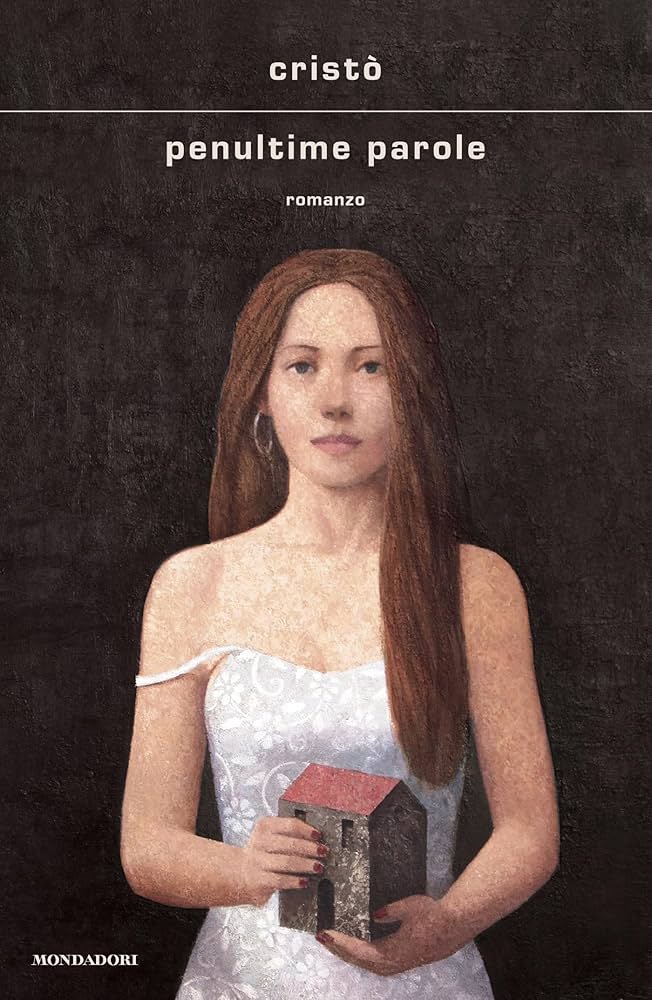
“Every word is a seed that is destined to become a fruit tree, this novel is a garden of literature, mystery and precision.” Mario Desiati - Winner of Strega Prize 2022
A reference author in the Italian indie scene.
A novel unparalleled in contemporary Italian fiction, a dense tale of metaphorical and powerful fantasy.
There used to be a house on the hillside on the edge of a small inland village, a family of five sharing the three rooms, the six chairs, the two mirrors and the many books neatly arranged on the shelves. But now, for the two old sisters left alone to inhabit it, that time is a repertoire of blurred, distant images. Even the present seems to be rarefied and, with it, social relationships. Having lost all contact with the inhabitants of the village at the bottom of the valley, they soon renounce even words, which they gradually begin to eliminate, going so far as to bury the hundreds of books to “make room for the silence ” that occupies the house. Even memories seem to belong to a past that is hard to believe in. While death, as if by forgetfulness, spares the house, Teresa, almost a hundred years old, inaugurates a symbiotic life with the plants she cultivates, transforming them into confidantes, companions. The lights in the village at the bottom of the valley are getting fewer and fewer, the howling of the wolves from the surrounding woods closer and closer, until one day, Teresa makes an impossible decision.
Between Ágota Kristóf and Tommaso Landolfi, Cristò returns with a metaphorical but very concrete novel about the correspondence between human being and nature, the power of language and the illusion of freedom.
I started.
I dug a hole in the ground not far from the house and threw in fifteen volumes of an animal encyclopedia dating back to my father’s elementary school.
Then Teresa, with the twelve volumes of the illustrated Divine Comedy that my mother said she’d taken out a loan for when we were little girls.
I took all our old storybooks.
Except one.
I put it in a drawer that she never opened.
We cleared out several shelves, never together. Each of us, independently, whenever we felt our silence needed more space, went out, dug a deep hole in the ground in front of Teresa’s bedroom window, filled it with books, and covered it with that stony, difficult earth.