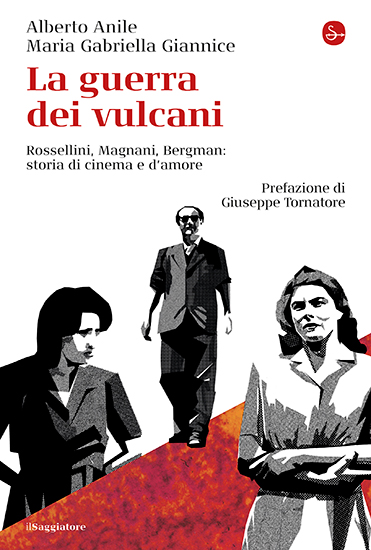
A triangle of cinema, love, and jealousy involving Roberto Rossellini, Anna Magnani, and Ingrid Bergman during the filming of Stromboli and Vulcano
If it is true that no man is an island, some islands tell more than others what it means to be human.
At the end of the 1940s, Roberto Rossellini and Anna Magnani are the most famous couple in Italian cinema: he is the leading director of neorealism, she the star of his masterpiece Roma città aperta. Passionate lovers and frequent quarrelers, celebrated by audiences and critics alike, their relationship fills newspapers and seems unbreakable—at least until a letter arrives from Ingrid Bergman, the most famous diva in America, eager to work with the director. From that moment on, everything changes: Rossellini chooses her for his new film Stromboli, also becoming romantically involved with her, while Magnani responds by agreeing to star in Vulcano by William Dieterle. Within just a few months, between vibrant mid-century Rome, Hollywood, and the Sicilian archipelago, a private rift turns into a public challenge, as the two films take shape side by side in the same landscape of lava, wind, and sea.
The Volcanic War is a tale of ambitions and defeats, challenges and deceptions, and also a fascinating portrait of the postwar film world, filled with celebrated stars and rival crews, journalists chasing scoops, and producers willing to do anything.
Alberto Anile and Maria Gabriella Giannice guide us across the two sets, following the many threads that weave this story together: from the visionary Panaria Film of Prince Alliata di Villafranca to the boycott of Stromboli by a bigoted public, from accusations of plagiarism to the many figures who passed through this affair—among them Jean Cocteau and Federico Fellini, Totò and Alfred Hitchcock, Greta Garbo and Errol Flynn.