My father died of a stroke, out of the blue.
He was survived by my mother, who had had cancer for years.
She should’ve died first.
We were all expecting my mother to die.
Every day, for four years.
No one talked about it.
But we knew it, everyone knew it.
Living death, that’s what it was.
My mother’s death.
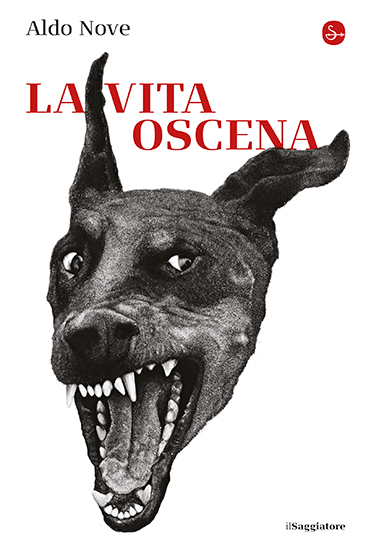
This book burns. It burns in the hands of its author. Years later, it still burns.
This book, considered a contemporary classic in Italy, was published by Einaudi in 2010 and it’s been the most loved and acclaimed book by Aldo Nove, the so-called last of the Italian avant-garde. In 2014 the book was adapted into a move directed by Renato De Maria and with Clément Métayer and Isabella Ferrari.
It is the story of a painful coming-of-age of a boy – a young Aldo Nove – who watches the colourful world of his childhood crumble all around him. But it is also the tale, sincere and violent, of a search for purity amid the wildest obscenity. It is the story of his mother’s illness, of both the deaths of his father and mother, one after the other, and the loneliness of suddenly finding himself an orphaned teenager. And it’s the story of a sort of initiation to the abyss, a journey into the underbelly of his own youth that starts with the abuse of alcohol and drugs, goes through a fire, and culminates in his yielding to an unquenchable sexual desire.