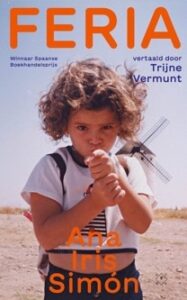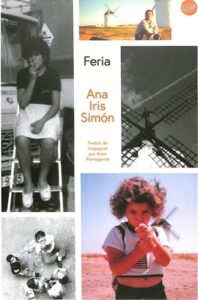
“This book really fascinates me, its idea, its topic. I like her style, her prose, her images. […] The book seems like an ode to her parents and grandparents, to simple life, to more connection with the land, to families, to the future of a nation that cares about its population. It's an ode to La Mancha, its beauty and its literary forbears and influences.” Laurenz Bolliger, editor at Hoffmann & Campe
“Incredibly beautiful poetry of her language, clever and socially critical thoughts, and a great declaration of love for mothers and grandmothers.” Jella Haase, Die Zeit
“A family memoir and a portrait of Spain, where every contrast is possible. Sometimes it recalls Almodóvar’s Volver and it’s filled with Don Quixote’s idealistic spirit. Thrilling.” Letras Libres
“This chronicle brings a Spanish portrait of those who ‘envy’ their parents’ lives told through lyric sarcasm. The author wonders if her generation is more free, more conscious and happier than the previous one.” Alfonso Armada, Babelia, El País
“A damn wonder.” Elvira Navarro
“Dazzling, bursting with truth.” Sergio del Molino, autor of La España vacía
“I had not read a stronger love declaration from one sibling to another since El desbarrancadero by Fernando Vallejo.” Rodrigo Blanco Calderón, author of The Night
“The most honest and authentic book I’ve read in months. It’s beautiful, striking and it leaves a mark, just as La Mancha, the sea of esparto where this woman was born.” Karina Sainz Borgo
“An extraordinary memoir that brilliantly masters all types of literary registers, from the poetic journalistic account to the essay, and to the robust prose.” Rubén Amón, El Confidencial
“This Fair shines... How well it understands pride, and how well it describes it. Ana Iris Simón has a strong sense of (poetic) justice. What a thrill to discover such a voice. A beautiful book.” Miqui Otero, author of Simón
“A unique literary ethnography called to last and to become a reference of our times. A testimony of what Spain is, what we are, and choose to ignore.” Brenda Navarro, author of Empty Houses
“A wild ode to a Spain that has disappeared and that takes on tradition, territory and the scars inflicted by modernity.” Laura Barrachina, El Ojo Crítico
“The literary debut of an ancient, old and wise writing.” María Jesús Espina, Valencia Plaza
“A literary debut that painstakingly portrays a forgotten Spain, a lost society and a generation without identity, through a personal story set in the traveling funfair.” María Serrano, Telva
“Simón takes the reader on a tour to a world of shifting values and highlights how consumerism turned more and more into a life purpose.” Ute Müller, NZZ
“A powerful story, both intimate and social, about a disenchanted generation. With her unique and powerful voice, Ana Iris Simón fascinates as much as she disturbs, and her audacious and original text tackles head-on the question of transmission, feminism and motherhood, shaking up our certainties.” Anne Plantagenet, author and translator
*2020 Spanish Booksellers Best Debut Book Award*
*Over 70,000 copies sold*
Ana Iris grew up hearing her grandparents from both sides telling stories of disappearing worlds. Ana Iris was born in a small village in La Mancha and was 10 years old when she saw the sea for the first time. Her parents were postal workers and her grandparents sold knick-knacks at a travelling fun-fair, a disappearing world. She was ashamed of her school and when she arrived to Madrid, she decided to embrace everything it had to offer, only to find out that she was jealous of the life that her parents had when they were her age.
Addressing contemporary issues on youth, family roles, heritage, and values, often going against the mainstream, Ana Iris Simón has written a fierce ode to a country which no longer exists, that has ceased to be. An uncensored and straight tale from a not-so-distant time, when a happy child with a firework was more important than dogs suffering due to noise.
Fair is plea for memory, our one and only pillar.
I will have to take you up to the Hill of the Virgin and tell you that this is La Mancha, and that it is from this orange-tinted land that we come; that the mantle of esparto grass that never seems to end is what you are made of. I will have to explain to you what a Pueblo is, and you will learn that ours is crossed by three realities: the total absence of relief, Don Quixote, and the wind. I will have to remind you that you are the grandson of a postal family, the great-grandson of peasants and fairground folk, the great-great-grandson of an exiled customs officer and a tinker’s woman, and that then you will feel yourself the heir to a mythical lineage.
The one that could fit inside the photograph his grandfather carried in his wallet, with a gypsy on one side and a Civil Guard on the other. A blunt, unbuttoned account of a time not so distant, when it mattered more that children enjoyed setting off firecrackers than the fright it gave the dogs. It is also a warning that rural childhood, besides breathing pure air, means knowing where the brothel is and laughing along with the village fool. A survey of the cracks in modernity, and an invitation to look again at what is sacred in the world: tradition, lineage, speech, territory. And not to forget that the only thing that truly holds us up, in the end, is memory.